

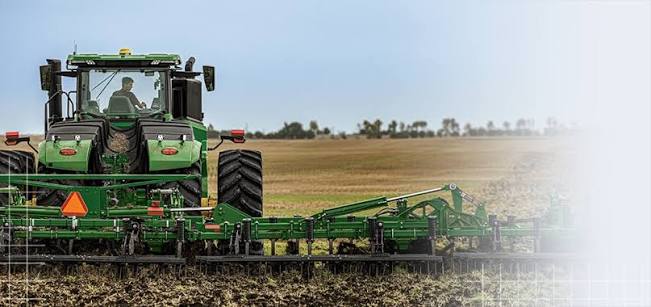
A quiet change is taking place in farm workshops and independent repair shops. Where a shelf of dog-eared binders once held the technical knowledge needed to keep a tractor, combine or loader running, a laptop, tablet or workshop phone now increasingly does the same job. Digital repair documentation, once a convenience for the few, is becoming part of the standard tool kit for farm equipment owners and the independent mechanics who serve them.
The shift reflects a wider pattern across rural and agricultural life. Machinery has grown more complex and more expensive, dealer networks have consolidated in many regions, and the cost of downtime during planting or harvest can be severe. Against that backdrop, owners and small workshops are looking for ways to diagnose faults, order the correct parts and complete routine servicing without waiting for an appointment or a travelling technician. Accurate documentation is the foundation of that effort.
Why Documentation Matters More Than It Used To
Older tractors could often be serviced by feel and experience. A skilled operator who had spent decades around the same family of engines could set valve clearances, adjust a clutch or trace a fuel problem with little more than a set of spanners and a memory of how the machine was supposed to behave. Modern equipment is different. Electronic control units govern engine timing, transmission behaviour, hydraulic flow and emissions systems. Wiring harnesses run to dozens of sensors. Fault codes replace the audible cues that once told a mechanic where to look.
In that environment, guesswork becomes expensive. Replacing a sensor that was never faulty, or overtightening a fastener on a component that requires a precise torque value, can turn a small problem into a larger one. Documentation written for the specific model and serial range describes what the machine is supposed to do, how each system is laid out, and what values technicians should expect when they test it. For an owner working alone at the edge of a field, that written reference is often the difference between a repair completed before dark and a machine that sits idle until help arrives.
Service, Technical and Parts Manuals: What Each One Contains
The terms are often used interchangeably, but the main categories of equipment documentation serve different purposes, and knowing which one to reach for saves time.
- Service or repair manuals describe how to take systems apart, inspect them, repair or replace components and reassemble them correctly. They typically include step-by-step procedures, torque specifications, clearances and tolerances, fluid capacities, and the safety warnings that apply to each task. This is the document a mechanic uses when a component has failed and must be fixed.
- Technical manuals tend to go deeper into how systems function. They cover theory of operation, diagnostic procedures, electrical and hydraulic schematics, test specifications and troubleshooting trees. When a machine displays a fault code or behaves erratically, the technical manual is usually where the investigation begins.
- Parts manuals are illustrated catalogues that break each assembly into its individual components, showing exploded views with part numbers and quantities. They allow an owner to identify exactly which item has failed and to order the correct replacement rather than a near-match that may not fit.
- Operator manuals, which sit alongside these, describe day-to-day use, routine checks and scheduled maintenance intervals rather than in-depth repair.
Together, these documents form a complete picture of a machine. A combine owner facing an intermittent hydraulic fault might start with the technical manual to understand the circuit, move to the service manual to remove and inspect a valve, and finish with the parts manual to order a seal kit. Having all three available on the same device, searchable by keyword, shortens each of those steps.
Diagnostics, Wiring Diagrams and Torque Specs
Three categories of information come up again and again when mechanics describe what they value most in digital documentation.
The first is diagnostic guidance. Modern machines log fault codes, but a code on its own rarely identifies the failed part. It points to a circuit or a condition, and the manual explains what that circuit includes, what readings are normal and which tests narrow the possibilities. Following a structured troubleshooting sequence reduces the temptation to swap parts at random, an approach that is slow, costly and often unsuccessful.
The second is wiring and hydraulic diagrams. Tracing a harness across a large machine without a schematic is tedious and error-prone. A diagram shows connector locations, wire colours and pin assignments, allowing a technician to test continuity or voltage at the right point. Hydraulic schematics do the same for pressure and return lines, valves and cylinders. On a digital screen, these diagrams can be enlarged to a legibility that small printed pages never offered.
The third is torque specifications and tolerances. Cylinder head bolts, wheel nuts, bearing preloads and hydraulic fittings all have values that must be met. Too loose, and components work themselves free under vibration; too tight, and threads strip or castings crack. A manual lists the values by fastener and, where relevant, the tightening sequence. Owners who once relied on the feel of a breaker bar increasingly recognise that a torque wrench and the correct figure are cheaper than a second repair.
How Digital Manuals Change Workshop Workflow
The practical effects of moving from paper to screen go beyond convenience. Independent workshops that service many brands describe several changes in how work is organised.
- Search replaces page-flipping. Finding a procedure in a multi-hundred-page binder meant consulting an index and hoping the numbering was accurate. A digital file can be searched for a part name, a fault code or a specification in seconds.
- Documentation travels with the technician. A tablet in a field, a phone under a machine or a laptop on a service truck puts the reference where the work is, rather than in an office some distance away.
- Diagrams can be enlarged and annotated. Zooming into a schematic or an exploded parts view makes small labels readable, and some workshops mark up copies with notes from previous repairs.
- Parts ordering becomes more accurate. With the exploded view and part number in front of them, owners can place an order with confidence rather than describing a component over the phone and hoping the supplier interprets it correctly.
- Records are easier to keep. Noting which procedure was followed and which values were used creates a service history that helps with later faults and supports resale.
Specialist suppliers have developed to meet this demand. Online stores that stock repair, service, technical and parts manuals for agricultural, construction and heavy equipment now offer searchable libraries where an owner can locate documentation by brand and model. A farmer looking for a John Deere Repair Manual, for example, can browse a catalogue organised by equipment type rather than tracking down an out-of-print binder. Such suppliers commonly state that they are not affiliated with or endorsed by any equipment manufacturer, that brand names are used for identification only, and that, where applicable, manuals are sourced through manufacturers or authorised distributors.
The Wider Debate Over Access to Repair Information
The growth of in-house maintenance sits within a broader and sometimes contentious conversation about who should have access to the information and tools needed to fix modern machinery. Equipment owners and independent repairers have argued that they should be able to obtain the same documentation and diagnostic capability that dealer networks use. Manufacturers, for their part, have pointed to safety, emissions compliance, software integrity and intellectual property as reasons for caution.
Several jurisdictions have examined the issue, and the discussion continues in policy circles, trade associations and farming communities. This article does not take a position on any specific proposal. What is clear from the market is that demand for accessible, model-specific documentation is strong, and that many owners regard the ability to understand and service their own equipment as a normal part of ownership rather than a privilege to be negotiated.
The Limits of Manuals Versus Dealer Tooling
Enthusiasm for digital documentation should be tempered with realism about what a manual can and cannot do. A manual explains procedures, specifications and diagnostic logic. It does not, on its own, provide the proprietary software interfaces that some tasks on modern equipment require. Calibrating certain electronic systems, reprogramming a control unit after a component change, or clearing some categories of fault may depend on dealer-level tools that are not available to the general public. In those cases the manual helps an owner understand what is wrong and communicate clearly with a dealer, but it will not replace the dealer visit.
There is also the matter of skill and equipment. Documentation is written for trained technicians and assumes access to appropriate tools, lifting gear and test instruments. A manual will describe how to remove a transmission, but it cannot supply the hoist, the stands or the experience needed to do so safely. Owners who take on more of their own maintenance generally benefit most when they are honest about the boundary between jobs they can complete well and jobs that belong with a specialist.
Safety Comes First
Heavy-equipment repair carries real risk, and every discussion of do-it-yourself maintenance should say so plainly. Machines weigh many tonnes, hydraulic systems operate at pressures that can inject fluid through skin, electrical systems can cause burns or fires if mishandled, and rotating components can catch clothing or limbs. Manuals include safety warnings, lockout procedures and cautions precisely because these hazards are well documented.
- Hydraulics under pressure must be relieved before lines are opened, and pinhole leaks should never be checked with a hand.
- Electrical systems require battery disconnection before work on harnesses or control units, and some components hold charge after the machine is switched off.
- Lifting and support of implements, cabs or machine sections demand rated equipment and proper stands; a jack alone is not a support.
- Stored energy in springs, accumulators and raised attachments must be identified and released before disassembly.
Some jobs, including many involving hydraulics under pressure, high-voltage or complex electrical systems, and the lifting of heavy assemblies, are best left to trained technicians with the right equipment. A manual makes an owner better informed; it does not make a dangerous task safe.
Keeping Equipment Running Through Harvest Season
The stakes of all this become clearest in late summer and autumn. A combine that stops in the middle of a crop cannot simply be parked until a convenient date. Weather windows close, grain quality deteriorates and contracted labour and transport wait on the machine. Owners describe the harvest period as the time when the ability to diagnose and fix a fault quickly has the highest value.
Preparation is the practical response. Many operators now use the weeks before harvest to work through scheduled service items from the operator and service manuals: belts, bearings, chains, filters, fluid levels and electrical connections. They keep parts manuals to hand so that common wear items can be identified and stocked in advance. When a breakdown does occur, a technician with the technical manual open can usually narrow the fault before deciding whether the repair is within reach or whether a dealer call is unavoidable.
Suppliers of documentation have adjusted to the seasonal nature of that demand. A store such as Ag Repair Press, based in Dover, Delaware, offers same-day order processing, secure checkout, a returns policy and email support alongside its searchable library, reflecting the expectation that a manual ordered during harvest is needed quickly rather than at leisure.
A Practical Rather Than Ideological Shift
For most farm equipment owners, the adoption of digital repair documentation is not a statement about policy. It is a practical response to complex machines, scarce technicians and tight seasonal windows. Service manuals, technical manuals and parts manuals each answer a different question, and having all of them available in searchable form changes how a workshop is run.
The limits remain real. Some tasks depend on dealer tooling, and some carry risks that no document can remove. But within those limits, the trend is clear: owners and independent mechanics who can read a schematic, follow a diagnostic sequence and torque a fastener to specification are keeping more of their maintenance in-house, and the manual on the tablet has become as much a part of the tool kit as the wrench in the drawer.
