

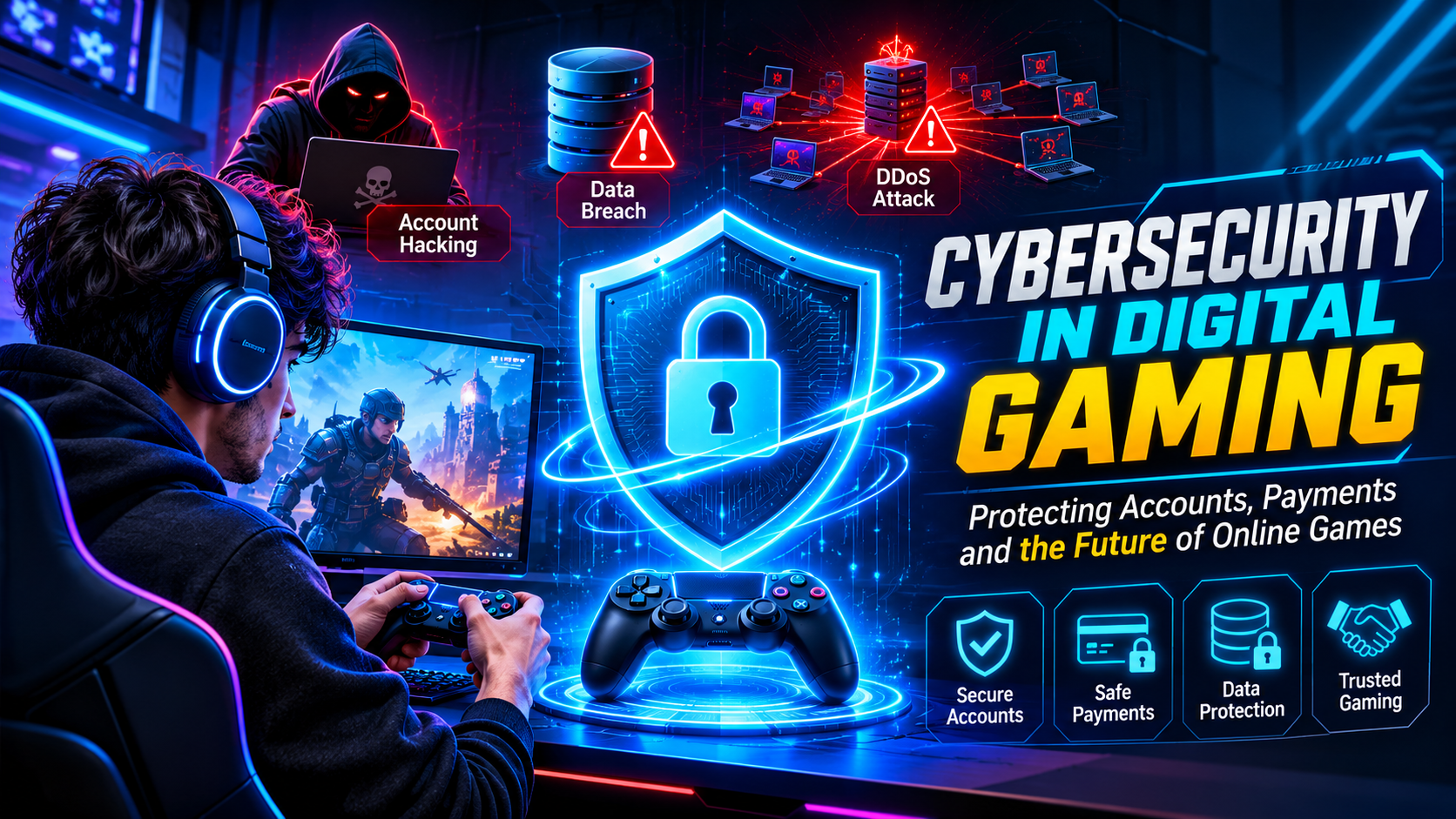
Millions of people use digital games to compete, solve puzzles, and connect with friends. Each time they sign in, they may share personal data with a game platform. Some also store payment details or buy digital items.
This makes gaming services a target for cybercrime.
A stolen password can give an attacker access to an account. A data breach can expose private details. A network attack can shut down a popular game during a major event.
For gaming companies, these threats create real costs. They may lose revenue, face legal claims, or spend weeks restoring damaged systems. Players may lose access to accounts they have used for years.
Cybersecurity helps prevent these problems. It includes tools and rules that protect accounts, payment systems, and computer networks.
As gaming platforms grow, they must defend more than game servers. They also need to secure mobile apps, online stores, chat systems, and cloud services.
The challenge grows when games handle financial transactions or connect players across several devices.
Strong security is now a core part of game design, not just a task for technical support teams. Understanding this shift shows why digital gaming companies are spending more time and resources on protecting their systems.
Why Gaming Accounts Have Become Valuable Targets
A gaming account may hold far more than a username and a password. It can contain saved progress, digital items, purchase records, and links to other services.
Some players spend years building their accounts. Losing access can mean losing game progress, rare items, and contact with online friends.
This makes account theft a serious concern for gaming platforms.
Attackers often try passwords stolen from unrelated websites. If someone uses the same password for several accounts, one data breach can put all of them at risk.
This method is known as credential stuffing. Automated tools test stolen login details against other services, hoping to find a match.
Fake login pages pose another threat. A player may receive a message that claims to offer a free item or an urgent account update. The message leads to a website that copies the real login screen.
A user who enters their details here may unknowingly send them to an attacker.
Gaming companies reduce these risks through multi-factor authentication, login alerts, and checks for unusual account activity.
For example, a platform may request extra proof of identity when someone signs in from an unfamiliar device. It may also warn the account owner when a password changes.
These controls help protect more than digital items. They also guard personal details and payment records linked to the account.
Account security begins with identity. A gaming platform must be able to tell the real account owner from someone using stolen credentials.
How Gaming Platforms Protect Payments And Personal Data
Many online games let players buy items, pay for access, or renew a subscription. Each payment creates a need to protect financial data.
Encryption helps keep this data private. It turns readable information into coded text while it travels between a device and a server. Without the right key, someone who intercepts the data cannot easily read it.
Platforms can also use payment tokens. A token stands in for a card number, so the game does not need to store the full card details.
Security teams also watch for unusual payments. A sudden series of purchases from a new device may trigger an extra check.
These safeguards matter in games that handle real-money transactions, including regulated casino-style platforms. Such services may need to meet strict rules for data protection and payment security.
Yet payment safety is only part of the task. Gaming companies also store email addresses, account settings, and chat records.
Data minimization reduces risk by limiting what a platform collects and keeps. If a company stores less sensitive data, a breach may expose less information.
The goal is clear: protect each transaction while keeping personal records out of the wrong hands.
Why Online Games Need Protection Against Network Attacks
An online game needs a steady link between players and its servers. Even a short break can end a match, delay a move, or block access to an account.
One major threat is a distributed denial-of-service attack, often called a DDoS attack. It floods a service with more traffic than it can handle.
Think of a stadium entrance where thousands of people arrive at once. Even those with valid tickets may struggle to get inside.
A DDoS attack creates a similar problem for computer networks. Large amounts of unwanted traffic can slow a game or make it unavailable.
Gaming companies use traffic filtering to separate harmful requests from normal activity. They also spread network traffic across servers to reduce the strain on any single system.
Cloud services can provide extra capacity during sudden traffic spikes. Monitoring tools help engineers spot unusual activity before it causes a major outage.
These defenses protect more than match results. They help keep chat systems, account services, and online stores available.
Reliable access is part of cybersecurity. A secure platform must protect its data while keeping its services running when players need them.
How Artificial Intelligence Helps Detect Security Threats
Large gaming platforms process thousands of account actions each second. Security teams cannot check every login, payment, or network request by hand.
Artificial intelligence (AI) can help by finding unusual patterns in this data.
For example, a system may notice that one account has received login requests from several distant locations within minutes. It can flag the activity for review or request an extra identity check.
AI tools can also help detect fraud, including unusual payment activity and attempts to abuse digital marketplaces.
These systems learn from past data, but they can make mistakes. A player traveling abroad may trigger an alert despite doing nothing wrong.
That is why security teams must test their models and review important decisions. Human oversight helps prevent false alerts from causing needless account restrictions.
AI does not replace passwords, encryption, or secure software. It adds another way to spot threats that older rules might miss.
The main benefit is speed. Automated systems can identify suspicious activity across large networks while trained staff investigate the most serious cases.
Why Cybersecurity Will Remain Essential To Digital Gaming
Digital gaming now depends on much more than fast servers and good graphics. Platforms must protect accounts, process payments safely, and keep online services available.
Each new feature can create a new security risk. Cloud gaming, shared accounts across devices, and digital marketplaces all increase the need for careful protection.
Strong cybersecurity requires constant work. Companies must update software, test their systems, and respond when threats change.
No single tool can stop every attack. Encryption protects data, login checks help secure accounts, and network defenses keep services running. Together, these measures reduce risk.
For players, the benefits are practical: safer personal data, fewer account problems, and more reliable access.
For gaming companies, security builds trust. A platform that protects its users creates a stronger base for long-term growth.
As digital gaming evolves, cybersecurity will remain a basic part of building services that people can use with confidence.
