

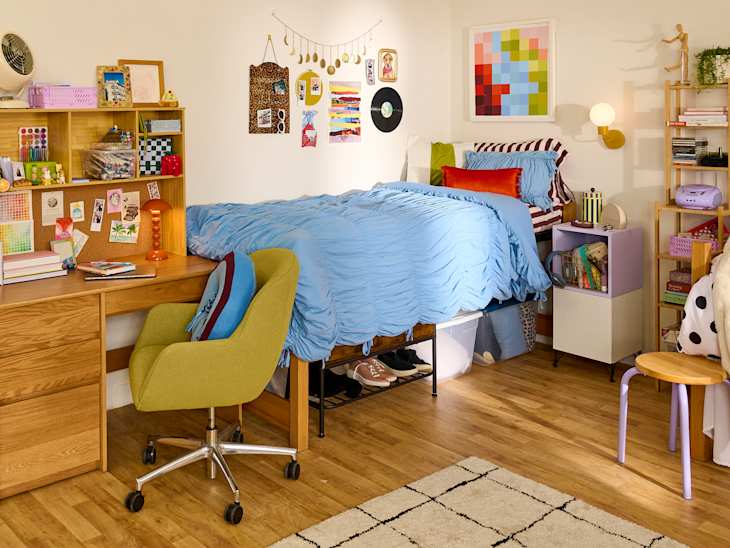
Somewhere around the second week of September, the internet decides it is autumn. Feeds fill up with knit sweaters, steaming mugs and desks lit like a candlelit library, and if you are living in a cinder-block dorm room with fluorescent overhead lighting and a meal plan, it can feel like the whole season is happening to someone else. It is not. Most of what makes a room feel like fall costs almost nothing, and the parts that do cost money can be handled with a single twenty-dollar bill and a little patience.
This guide is built for students specifically: small rooms, shared walls, no drilling, no candles allowed, and a budget that has to survive until the next paycheck or the next care package. Every idea below is under twenty dollars, most are under ten, and several are free. The point is not to recreate a magazine spread. The point is to make the place you study and sleep feel a little warmer than it did in August.
Start With Light, Because It Does Most of the Work
If you change only one thing, change the lighting. Dorm ceiling fixtures are bright, blue-white and unflattering, and they are the main reason a room feels like a waiting room instead of a bedroom. Switching them off after sunset and using a warmer, lower light source is the fastest way to get the fall aesthetic without buying a single decoration.
The classic move is a string of warm-white string lights, and they earn their reputation. Look for these details when you buy:
- Color temperature labeled “warm white” or around 2700K. Anything called “cool white” or “daylight” will make your room look like a dentist’s office.
- Battery-powered or USB-powered. Many dorms limit extension cords, and USB lights can run off a laptop charger or a power bank.
- A timer function if you can find one. Six hours on, eighteen hours off means the lights come on at dusk without you thinking about it.
A ten- to fifteen-foot strand usually runs between six and twelve dollars. Hang them with removable adhesive hooks or plain painter’s tape along the top of your bed frame, around the window, or draped over a bookshelf. Avoid stringing them across the ceiling; it looks like a party store and reflects harshly off white paint. Low and behind things is the rule. Light bouncing off a wall from behind your headboard or from the back of your desk creates a soft glow instead of a glare.
If string lights are not your style, a single clip-on reading lamp with a warm bulb does the same job for about the same price. Aim it at the wall rather than at your face.
Thrift One Textile, Not Ten
Texture is the second half of the fall equation. Fabric absorbs sound, softens hard corners and makes a room look lived-in rather than issued. You do not need a matching set of anything. You need one good piece, and the thrift store is where you find it.
The single most useful item is a throw blanket in a fall color: rust, mustard, olive, oatmeal, deep burgundy or plain camel. Secondhand blankets typically cost three to eight dollars. Check the tag for wool, cotton or a wool blend if you can, since they hold up better than thin polyester fleece, and give the blanket a sniff before you commit. Wash it on warm as soon as you get home, then fold it in thirds and lay it across the foot of your bed or over the back of your desk chair.
Second priority, if there is money left, is a pillowcase or two in a similar color family. Not a full pillow, just the case, which will cost a dollar or two and can be slipped over the pillows the dorm already gave you. Third priority is a small rug or bath mat in a warm tone for the spot beside your bed, so your feet land on something soft on cold mornings.
What to skip: decorative pillows with sayings on them, anything with glitter, and full curtain panels unless your room actually has a curtain rod. A thrifted scarf or a length of plaid fabric draped over a curtain rod or tension rod gives you the effect for a fraction of the price.
Bring In One Living Thing
A plant does something no decoration can: it changes over the semester. It also gives you a small daily task that is not homework, which matters more than it sounds during midterms. The trick is choosing a plant that will forgive you.
For a dorm with one window, a pothos or a snake plant is the right call. Both tolerate low light, both can be watered roughly once a week, and both cost between five and twelve dollars at grocery stores and hardware stores in a four-inch pot. If your room gets almost no natural light, a small pot of dried grasses or wheat stems from a craft store or a farm stand looks seasonal, costs about the same, and requires nothing from you at all.
A few practical notes:
- Keep the plant in its plastic nursery pot and set that inside a mug or bowl you already own. You save money on a planter and you can lift it out to water over the sink.
- Water when the top inch of soil feels dry, not on a fixed schedule. Overwatering kills more dorm plants than neglect does.
- Put it where you will see it from your desk or your pillow. A plant behind the door might as well not exist.
If you go home for Thanksgiving, water it well the day before you leave and move it a foot or two back from the window. Most hardy plants will handle five or six days alone without complaint.
Build a Study-Snack Routine Around the Season
The cozy feeling that everyone is chasing in October is mostly a feeling of having something warm in your hands while you do something you were going to do anyway. You can manufacture that on purpose, and you can do it from a dorm kitchenette or a single electric kettle.
Pick one warm drink to be your study drink for the semester and make it a ritual, not an occasional treat. Some options that cost under a dollar a serving:
- Black tea with a cinnamon stick dropped in the mug. One box of tea and one jar of cinnamon sticks will last months.
- Hot water with a spoonful of apple cider drink mix, or better, a splash of real apple juice heated in the microwave for ninety seconds with a pinch of ground cinnamon and nutmeg.
- Instant oatmeal made a little thinner than the package says, stirred with a spoon of peanut butter and a sliced apple. It is a snack and a hand warmer.
The routine matters more than the recipe. Before a study block, put the kettle on, set up your desk, and by the time the water is ready you have already started. Keep a small basket or a repurposed shoebox on your desk with the tea, the cinnamon, a spoon and a few snacks so you are not rummaging through a shared cabinet at eleven at night. A dedicated mug, thrifted for a dollar and used only for this, becomes part of the picture.
Roommate-friendly tip: if you share the kettle, agree on a clean-and-refill rule so it is always ready for the next person. Nothing kills the mood faster than a kettle with an inch of cold water and someone else’s tea bag in it.
Take the Aesthetic Outside With Campus Walks
You can decorate all you like, but the season itself is happening outdoors and it is free. A twenty-minute walk between classes or after dinner does more for your mood than another string of lights, and it gives you the sensory details that no room can: the smell of wet leaves, the sound of them underfoot, the way the light goes gold about an hour before sunset.
Make it deliberate. Choose one route on campus with the most trees and walk it once a week from September through November, at roughly the same time of day. You will notice the change week to week, which is the whole quiet pleasure of autumn. Bring the study drink in a travel mug. Leave the headphones off for at least part of it.
Collect a little while you are out. Three or four fallen leaves in good condition, pressed between the pages of a heavy textbook for a week, can be taped to the wall above your desk or slipped into a cheap frame. A handful of acorns or pinecones in a bowl on your windowsill costs nothing and looks better than most store-bought decor. Just leave them on a paper towel for a day or two first so anything living inside them has a chance to move out.
Find the Free Seasonal Events Before Everyone Else Does
Colleges and the towns around them run more free autumn programming than most students realize, and the information is usually posted in places nobody checks. Spend fifteen minutes in early September looking in these spots:
- The student activities office or its online events calendar. Fall festivals, outdoor movie nights, pumpkin painting and hot cider socials are common and almost always free with a student ID.
- The campus arboretum, botanical garden or grounds department, if you have one. Guided foliage walks and tree tours tend to be free and small.
- The local public library. Libraries host seasonal craft nights, film screenings and author talks, and they are open to students regardless of residency.
- Town and city parks departments. Community harvest fairs, farmers’ markets and outdoor concerts often continue into October.
- Religious and cultural centers on campus, which frequently host open harvest dinners and welcome anyone who shows up.
Write the dates in whatever planner you actually use and treat them like appointments. Bring a friend or a roommate, and bring the thrifted blanket to the outdoor ones. Half of the fall aesthetic is just being outside in a sweater with people you like, and the events are an excuse to do it without spending anything.
Keep It Roommate-Friendly
The hardest part of decorating a dorm is not the budget. It is the other person. A few ground rules keep the peace:
- Keep decor on your side of the room and on your own surfaces. Shared walls and shared shelves stay neutral unless you have both agreed.
- Use lights with a switch or timer so you can turn them off when your roommate is sleeping and you are not.
- Skip anything with a scent unless you have asked. Plug-in fresheners and reed diffusers seem harmless until someone gets a headache from them. A bowl of whole cloves and a dried orange slice on your own desk gives a faint, natural fall scent without filling the room.
- Ask before you thrift a second blanket for the shared couch or futon. Most roommates will say yes, and then it is a shared project rather than a takeover.
The team at WellnessZing put together a full guide to getting in the mood for autumn without buying pumpkins, and the underlying idea carries over neatly to dorm life: the season is a mood you build with light, texture, warmth and small rituals, not a shopping list. Once your roommate sees the string lights come on at dusk and a warm mug on your desk, do not be surprised if they start asking where you got the blanket.
A Sample Twenty-Dollar Shopping List
To make this concrete, here is one way to spend exactly one bill:
- Warm-white USB string lights, 10 to 15 feet: about 8 dollars
- Thrifted throw blanket in a fall color: about 5 dollars
- Small pothos or snake plant in a nursery pot: about 5 dollars
- Jar of cinnamon sticks or a box of spiced tea: about 2 dollars
Everything else on this page, including the walks, the leaves, the events and the study ritual, is free. If you already own a blanket or your grandmother is willing to part with one, that five dollars becomes a thrifted mug and a second pillowcase. Spend the money where it changes the room the most, which is almost always the lighting first.
The Short Version
A student fall aesthetic is not about having the right things. It is about switching off the overhead light, wrapping up in something soft, keeping one plant alive, walking outside on purpose and making the same warm drink before every study session until it feels like a habit. None of that requires more than twenty dollars, and most of it requires nothing at all. Start with the lights this week, add one thing every week after that, and by the time the leaves are actually down you will have a room that feels like the season instead of a room you are waiting out until winter break.
