

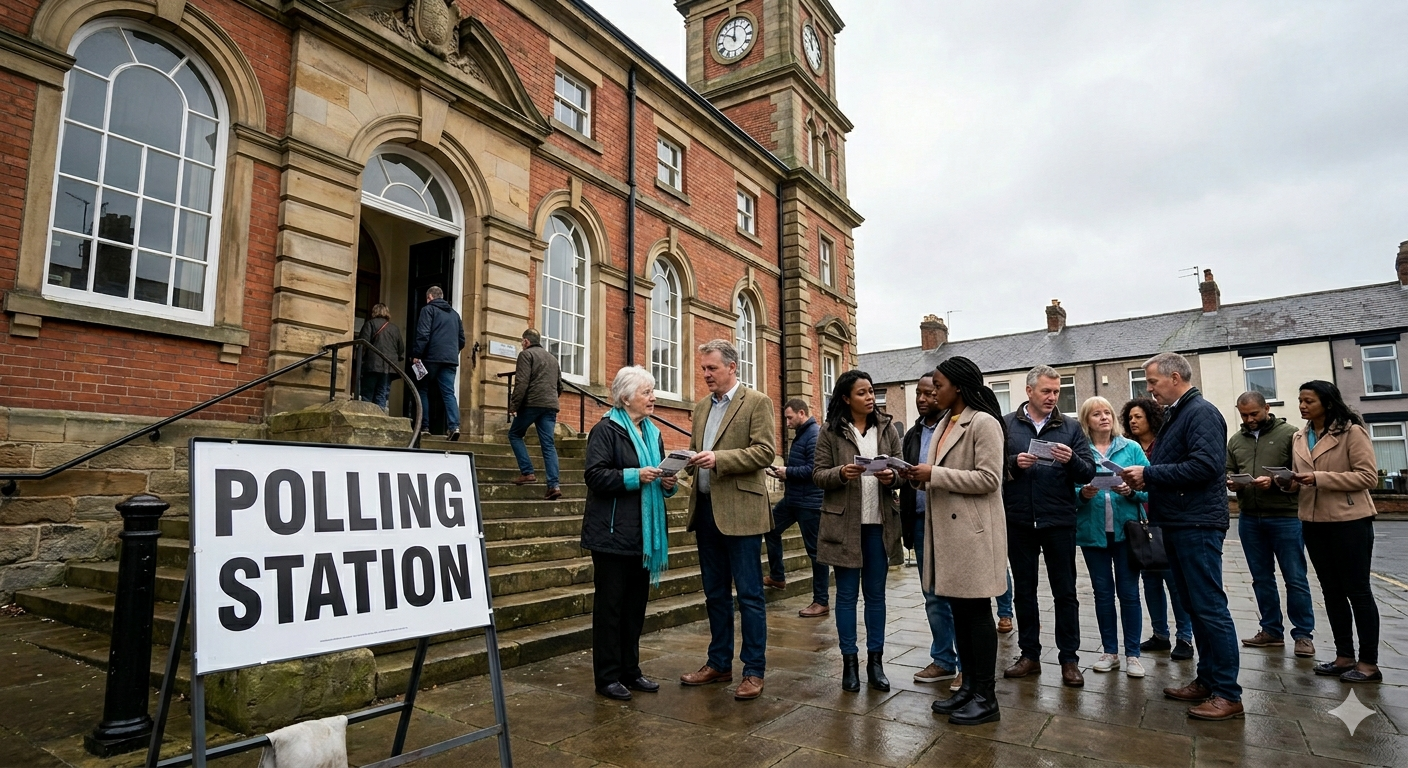
The political landscape of the United Kingdom has just witnessed a tremor that few saw coming. As the results of the Nigel Farage local elections for 2026 continue to pour in, one thing is becoming crystal clear: the old two-party system is under immense pressure. Nigel Farage, the leader of Reform UK, is currently hailing what he calls a “historic change” that could reshape the country’s future forever.
For years, British politics has been a tug-of-war between Labour and the Conservatives. However, the early hours of Friday, May 8, told a very different story during the Nigel Farage local elections coverage. While people across the nation were sleeping, ballot boxes were being emptied, revealing a “turquoise wave” that has left traditional political giants reeling and searching for answers.
Reform UK’s Stunning Breakthrough in the Nigel Farage Local Elections
The numbers coming out of the count centers are nothing short of remarkable for a party that many dismissed as a fringe movement just a few years ago. During these local elections, the party has not just won seats; they have dominated specific areas with overwhelming force. This isn’t just a minor protest vote; it’s a structural shift in how people are casting their ballots in the modern era.
- 150+ Seats Won: In the very early stages of the count, with only 13 out of 136 councils reporting, the impact of the local elections was already clear as the party surged past the 150-seat mark.
- Hartlepool Clean Sweep: In a move that stunned political analysts, Reform UK won all 12 seats available in Hartlepool, effectively stripping Labour of its control over the council.
- Newcastle-under-Lyme Victory: The party took outright control of the Newcastle-under-Lyme Borough Council, securing 27 out of 44 seats, marking a high point for the local elections campaign.
Clearing Becher’s Brook with Reform UK
Nigel Farage himself was in a jubilant mood as he spoke to reporters about the ongoing local elections. He used a famous horse racing analogy to describe the night’s events. He compared the difficult local election hurdles to Becher’s Brook, the notoriously tough jump in the Grand National. According to Farage, his party has not only cleared the jump but has landed perfectly, setting them up for a potential victory in the next general election.
The Collapse of the Traditional Strongholds
While Reform UK celebrates the success of the local elections, the two main parties are facing a “giant tombola of dissatisfaction.” The results suggest that the “red wall” and “blue wall” are no longer the solid barriers they once were. Voters in traditional heartlands are looking elsewhere, and they are finding their answers in the candidates supported by the local elections movement and the Green Party.
Labour’s Difficult Night Against Nigel Farage Local Elections Momentum
Despite hopes for a strong showing, Sir Keir Starmer’s Labour Party has faced significant losses against the Nigel Farage local elections surge. The party saw a drop of more than 120 seats in the early counts. Traditional northern strongholds, which Labour worked hard to reclaim, are now slipping away to Reform UK as the Nigel Farage local elections results continue to confirm a shift in public mood.
The pressure is mounting on Sir Keir Starmer. Some within his own party are already calling for a timetable for his departure, suggesting that the current leadership is “underwater” in key regions like Yorkshire and the North West, where the Nigel Farage local elections message resonated most strongly.
The Conservative Struggle and the Rise of Reform
The Conservatives, led by Kemi Badenoch, are also feeling the heat from the Nigel Farage local elections. While they managed to hold onto some areas like Harlow and Broxbourne, they have lost control of several councils. In Dudley, the Tories lost their overall majority as the Nigel Farage local elections candidates picked up 22 seats, taking votes from every other major party in the process.
A “Turquoise Wave” Defining the Nigel Farage Local Elections
The phrase “turquoise wave” was coined by Reform’s Zia Yusuf to describe the party’s momentum during the local elections. This wave seems to be crashing hardest in the Midlands and the North of England, areas previously ignored by the London-centric elite.
- Redditch and Tamworth: Both councils have moved to “no overall control” after significant Nigel Farage local elections gains.
- Wigan and Chorley: Even in these solid Labour areas, the Nigel Farage local elections candidates managed to snatch seats away, proving they can compete anywhere.
- Hull City Council: The Liberal Democrats lost their majority here, with Reform UK gaining 10 seats in a straight fight that left both traditional parties damaged by the Nigel Farage local elections outcome.
The Death of the “Left-Right” Divide?
One of the most provocative claims made by Nigel Farage following the Nigel Farage local elections results was that the traditional “left-right” divide in British politics is effectively dead. He argues that the new divide is between the “establishment” and those who feel left behind by the mainstream parties.
High Vote Percentages in the Nigel Farage Local Elections
In some wards, the Nigel Farage local elections candidates didn’t just win; they secured more than 50% of the total vote. This is a massive leap from previous years. For context, in the Runcorn and Helsby by-election last year, the party won by only six votes. The shift in vote share during the Nigel Farage local elections today suggests that their message is resonating with a much broader audience than ever before.
What the Nigel Farage Local Elections Mean for the Future
The Nigel Farage local elections results are being viewed as a “stepping stone” toward the 2026 General Election. Farage is confident that the voters who joined him today for the Nigel Farage local elections will stay with the party for the long haul.
However, political commentator Robert Peston warns that this fragmentation brings “enormous uncertainties.” With at least seven parties now claiming meaningful national or local vote shares following the Nigel Farage local elections—Reform, Greens, Lib Dems, SNP, Plaid Cymru, Labour, and the Conservatives—the old rules of the first-past-the-post system could lead to some very strange outcomes in the future.
The Rise of the Greens Alongside Nigel Farage Local Elections
It wasn’t just a big night for the Nigel Farage local elections crew. The Green Party, led by Zack Polanski, also predicted “record-breaking” results. Meanwhile, the Liberal Democrats saw success in Stockport and Portsmouth, proving that the electorate is more divided than ever, even as the Nigel Farage local elections dominated the headlines.
Final Thoughts on the Nigel Farage Local Elections
The Nigel Farage local elections of 2026 will likely be remembered as the moment the two-party duopoly finally shattered. Whether you see the Nigel Farage local elections as a “historic change” or a “crisis of democracy,” the results are undeniable. Reform UK has moved from the fringes to the center of the political stage, and they don’t seem to be going anywhere.
As we move toward the general election, the question is no longer whether the Nigel Farage local elections momentum can win seats, but how much it can disrupt the status quo. If they can maintain the energy seen in the Nigel Farage local elections, the UK’s political future will look very different from its past.
What do you think about the results of the Nigel Farage local elections? Is this a healthy change for British democracy, or a sign of deeper trouble? Leave a comment below and let us know your thoughts on the Nigel Farage local elections impact!
Read Another Interesting news here: Trump Iran War News
