

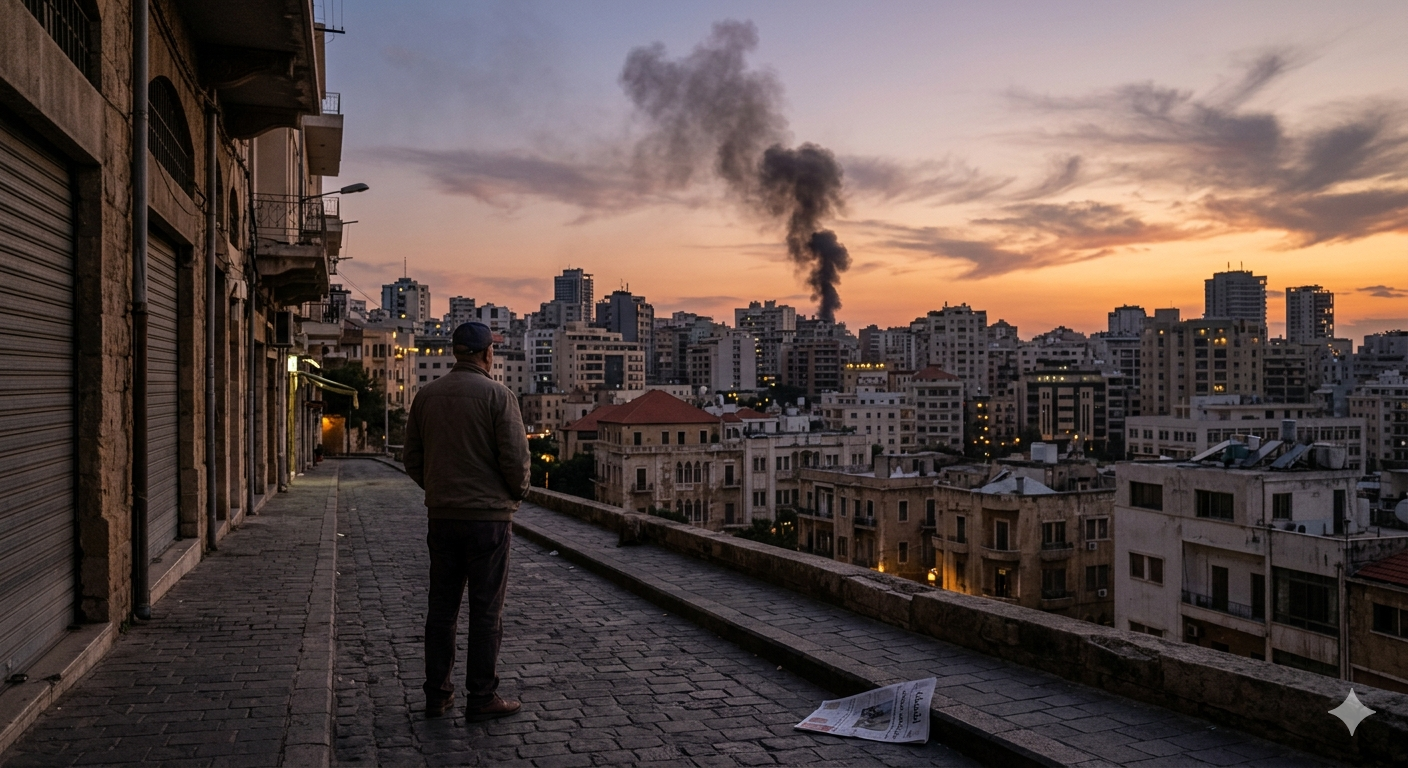
The delicate peace in the Middle East faced a sudden and massive challenge this week when news broke of a Hezbollah commander killed in the heart of Beirut. For months, local residents had hoped that the recent ceasefire agreement would lead to a permanent end to the daily violence. However, a precise and sudden airstrike has shattered that relative calm, marking the first time Israel has targeted the Lebanese capital since the truce began.
This development has sent immediate ripples of concern through the international community. People across the globe are now asking if the ceasefire can survive such a direct hit. When a Hezbollah commander killed in such a bold fashion becomes the headline, diplomatic efforts are pushed to their absolute limit. As we examine the facts, we see a complex picture of military strategy, deep political tension, and the human cost of a conflict that refuses to stay quiet.
The Sudden Strike on Beirut
On Thursday, May 7, 2026, the sound of a powerful explosion echoed through the residential streets of Beirut. It was a sound that many civilians in the city thought was finally a thing of the past. Shortly after the blast, the Israeli military confirmed that it had carried out a targeted strike in the city, focusing on a specific high-value target.
This was not a broad or random bombardment, but a surgical military operation. The goal was clear: to eliminate a key figure within the Hezbollah organization. The timing of the attack is particularly significant because it happened while a ceasefire was technically in place. Having a Hezbollah commander killed during a period of supposed rest has raised immediate questions about the rules of engagement and the future of the truce.
Identifying the Target: A Hezbollah Commander Killed
The primary focus of the operation was a senior military leader within the group. The Israeli Defense Forces (IDF) identified the individual as a top-tier operative who was responsible for coordinating attacks against northern Israel. By the time the dust cleared, it was confirmed that the Hezbollah commander killed was a central figure in the group’s strategic planning and precision strikes.
A High-Value Military Asset
This specific commander had been under surveillance by intelligence agencies for a significant period. According to military reports, he played a vital role in managing the group’s precision missile program, which has been a major concern for regional stability. The fact that this Hezbollah commander killed in the strike was so influential makes the potential for escalation even higher. His removal is seen by Israel as a necessary step to prevent future threats, regardless of the current ceasefire status.
The Location of the Attack
The strike took place in a densely populated neighborhood within the capital. Despite the precision of the high-tech weaponry used, the choice of location shows that the target was operating in an area where he likely felt safe from aerial detection. Reports of a Hezbollah commander killed in such a central urban zone highlight the risks inherent in modern urban warfare. This tactic of embedding military figures within civilian zones continues to be a point of major contention between the two warring sides.
Why Did Israel Strike Now?
Many observers wonder why Israel would risk the stability of the ceasefire to carry out this specific mission. The Israeli government has consistently maintained that the ceasefire was never a “blank check” for Hezbollah to rebuild its strength or plan new operations. They argue that they have a sovereign right to act if they detect an “imminent threat” or a direct violation of the peace terms.
Intelligence and Tactical Timing
Sources suggest that “actionable intelligence” became available that required an immediate response to prevent a planned operation. Waiting for the ceasefire to evolve might have meant losing the brief window of opportunity to strike the high-value target. With the Hezbollah commander killed, the IDF believes it has significantly degraded the group’s operational capacity in the short term. The risk of letting a dangerous operative continue his work outweighed the diplomatic risk of breaking the silence in Beirut.
The Ceasefire Under Extreme Pressure
The ceasefire agreement was originally designed to create a buffer zone and stop the daily exchange of rocket fire. It was a deal brokered with the heavy help of international mediators who wanted to prevent a full-scale regional war. With a Hezbollah commander killed in the capital, that fragile deal is now hanging by a thread and could unravel at any moment.
Reactions from the Lebanese Government
The Lebanese government has expressed deep concern and anger over the strike. They view the entry of Israeli jets into Beirut airspace as a blatant violation of their national sovereignty and the spirit of the truce. Officials in Lebanon are currently calling on the international community to hold Israel accountable for what they describe as a serious breach of the ceasefire. The news of a Hezbollah commander killed has shifted the political focus from reconstruction back to defense.
Hezbollah’s Potential Response
The entire region is now waiting to see how Hezbollah will react to this loss. In the past, the group has promised “eye for an eye” retaliation for any strikes that target the city of Beirut. If they choose to respond to the Hezbollah commander killed by firing long-range missiles back into Israel, the ceasefire will likely collapse entirely, leading back to a cycle of heavy violence and destruction.
International Community Reacts to the Strike
World leaders have been quick to release urgent statements regarding the incident in the Lebanese capital. The United States and other international mediators are reportedly working behind the scenes to keep both sides from escalating the situation further. The news of a Hezbollah commander killed has forced diplomats back into emergency sessions to save the peace process.
The Role of Mediators
Diplomats are currently in a high-stakes race against time. They are speaking with leaders in both Tel Aviv and Beirut to reinforce the importance of maintaining the ceasefire. The message is clear: while having a Hezbollah commander killed was a major event, a return to full-scale war would be devastating for every nation involved in the region.
The Human Cost of the Renewed Violence
Beyond the military titles and political statements, there is the reality for the people living in these targeted areas. For the citizens of Beirut, the strike was a terrifying reminder that the war is not truly over. Seeing reports of a Hezbollah commander killed nearby destroys the sense of security many families had just begun to rebuild.
Fear and Uncertainty in the Capital
The psychological impact of a sudden explosion in a city that was supposed to be safe cannot be understated. Families are once again packing emergency bags and watching the news constantly for updates. The uncertainty of whether the Hezbollah commander killed in this strike will lead to a total war is a heavy burden for the civilian population to bear.
What Happens Next?
The next 24 to 48 hours will be critical for the future of the Middle East. If the situation remains calm, it might suggest that both sides are willing to overlook the Hezbollah commander killed to save the broader ceasefire. However, if we see more military movement on either side, it could be the start of a new, more intense phase of the conflict.
Critical Factors to Watch
- Official Statements: Keep an eye on the official channels of the IDF and Hezbollah for any declarations of war.
- Border Activity: Any movement of heavy troops or artillery along the “Blue Line” following the news of a Hezbollah commander killed will be a sign of immediate escalation.
- Diplomatic Visits: Watch for high-level officials traveling to the region to salvage the peace deal.
Final Thoughts
The news of a Hezbollah commander killed in Beirut has undoubtedly changed the landscape of the current ceasefire. While Israel views the strike as a successful defensive action, Lebanon and Hezbollah see it as a dangerous and illegal escalation. The path to lasting peace in the Middle East remains incredibly difficult and full of unexpected turns that test human resolve.
It is clear that a simple agreement on paper is not enough to stop the deep-rooted tensions in the region. Only through consistent diplomatic effort and a commitment to the rules of engagement can a true peace be found. We must hope that cooler heads prevail in the coming days so that the Hezbollah commander killed in this strike does not become the spark for a much larger fire.
What do you think about the future of the ceasefire? Share this article on social media and join the conversation about peace in the Middle East.
Read Another Interesting news here: Aydos Sadykov Murder Case
