

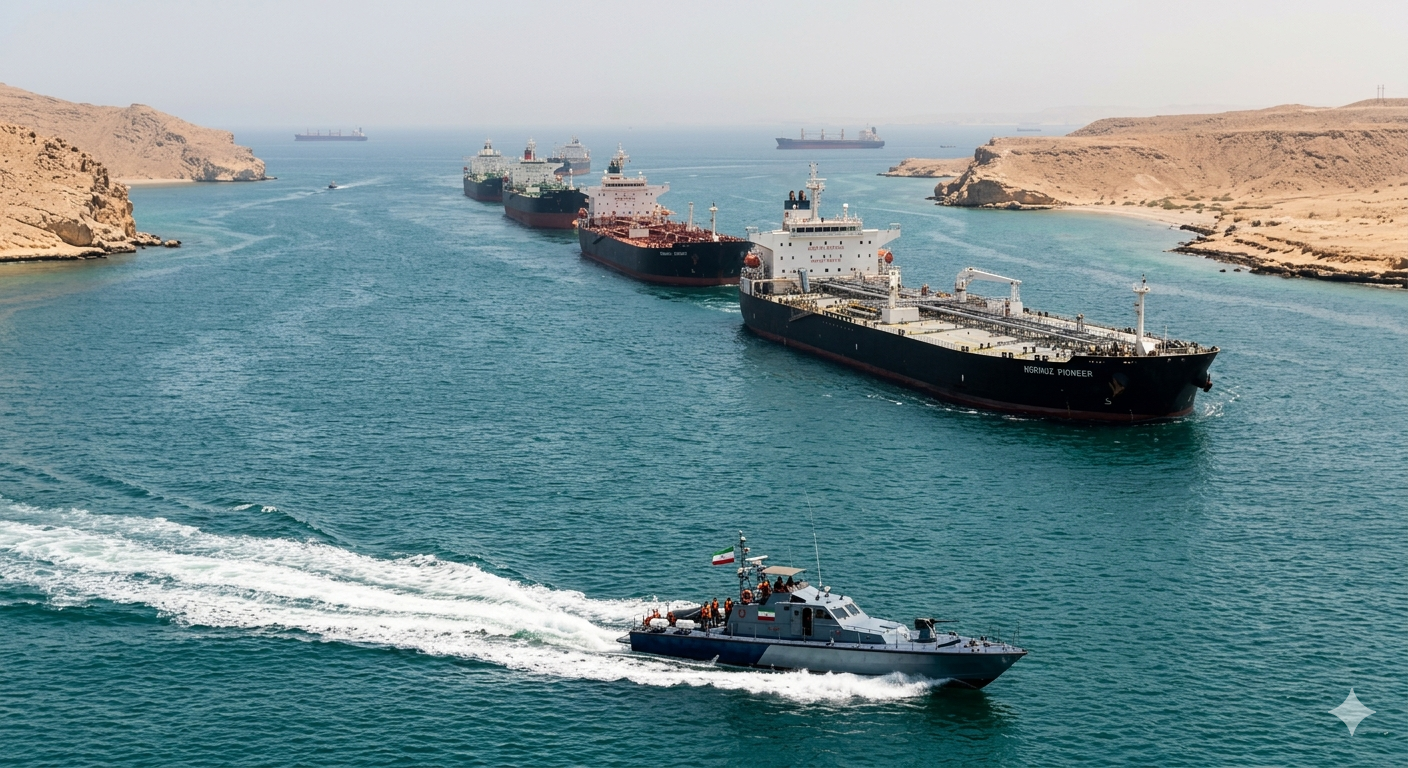
The global energy market is facing a massive shake-up as Tehran introduces strict new Strait of Hormuz rules designed to cement its authority over the world’s most critical oil chokepoint. For decades, this narrow strip of water was governed by international maritime laws that guaranteed freedom of navigation for all nations. However, recent documents reveal that Iran is now attempting to turn its wartime leverage into a permanent, permission-based system through these Strait of Hormuz rules.
This shift has sent shockwaves through the shipping industry and international capitals. By demanding detailed information and prior approval for every vessel, Iran is essentially claiming the right to decide who can and cannot pass through these strategic waters under the new Strait of Hormuz rules. As we dive into the details, it becomes clear that this move is about much more than security—it is about long-term economic and strategic dominance.
The Birth of the Persian Gulf Strait Authority
At the center of these changes is a brand-new entity called the Persian Gulf Strait Authority (PGSA). This body has been tasked with enforcing the new Strait of Hormuz rules and managing all maritime traffic entering or exiting the Gulf. According to reports, this authority acts as the official gatekeeper for the Islamic Republic, institutionalizing a level of oversight that has never existed before in this waterway.
The creation of the PGSA signals that Iran no longer views its control of the strait as a temporary wartime measure. Instead, the government is building a bureaucratic structure intended to last long after current hostilities end, firmly planting the Strait of Hormuz rules into daily operations. This “normalization” of authority is exactly what Western governments and maritime legal experts have been warning about for months.
Understanding the Vessel Information Declaration
The primary tool for enforcing these new Strait of Hormuz rules is a document known as the “Vessel Information Declaration“. This is not a simple check-in; it is a comprehensive application form that requires shippers to disclose sensitive data before they are granted safe passage under the Strait of Hormuz rules.
What Information is Required?
The PGSA application reportedly contains over 40 specific questions that vessels must answer in detail to comply with the Strait of Hormuz rules. Some of the mandatory fields include:
- Full details on vessel ownership and history.
- Complete lists of crew nationalities.
- Exact cargo descriptions and weights.
- Detailed voyage plans and destination ports.
The “Consequences” of Inaccuracy
Iran has made it clear that compliance with the Strait of Hormuz rules is not optional. Documents seen by journalists warn that any “incorrect or incomplete information” will be the sole responsibility of the shipping company. More alarmingly, the PGSA warns that failing to follow these Strait of Hormuz rules could result in serious “consequences” for the ship and its crew, which many interpret as a threat of military seizure or attack.
Challenging International Maritime Law
Legal experts argue that these new Strait of Hormuz rules directly defy established international frameworks, specifically the UN Convention on the Law of the Sea (UNCLOS). Under these global laws, international straits are protected as “transit passage” zones. This means that as long as a ship is moving continuously and peacefully, a coastal state cannot legally block it or require advance permission.
By imposing a permission-based system through the Strait of Hormuz rules, Tehran is attempting to unilaterally convert an international waterway into its own territorial corridor. If other nations begin to comply with these rules out of fear, it could create a “new normal” where the freedom of the high seas is replaced by selective restrictions imposed by regional powers.
The High Price of Safe Passage
One of the most controversial aspects of the new Strait of Hormuz rules is the reported demand for transit payments. Maritime risk consultancies have noted that Iran is already seeking what it calls “toll fees” for vessels to be granted permission to sail.
Million-Dollar Tolls
Some reports suggest that these fees can reach as high as $2 million per ship depending on the cargo and destination. This turns one of the world’s most vital trade routes into a massive revenue stream for the Iranian government, enforced by the Strait of Hormuz rules. For the global economy, these costs are inevitably passed down to consumers, contributing to the rising price of gas and goods worldwide.
The Sanctions Trap
For international shipping firms, paying these tolls creates a massive legal headache. The US Treasury Department has warned that any payments made to Iran or the Islamic Revolutionary Guard Corps (IRGC) are not authorized for American-linked entities. This leaves companies caught between the risk of an Iranian attack if they don’t pay and the risk of heavy US sanctions if they do.
A Human Crisis on the Water
While governments argue over laws and fees, thousands of people are caught in the middle of the battle over the Strait of Hormuz rules. According to Dimitris Maniatis of maritime risk firm Marisks, nearly 20,000 seafarers aboard roughly 1,000 vessels are currently stuck or facing extreme danger in the Gulf.
These sailors are civilians, not soldiers, yet they find themselves on the front lines of a geopolitical confrontation. The psychological toll of navigating waters where a single missing document could lead to an armed boarding is immense. As traffic through the strait has collapsed due to these risks, the global supply chain continues to suffer.
Supreme Leader’s Vision for a New Order
The drive to formalize these Strait of Hormuz rules appears to come directly from the top. Statements attributed to Supreme Leader Mojtaba Khamenei have called for a “new regional and global order” where Iran holds ultimate strategic leverage. He has explicitly pointed to using the “leverage of closing the strait” as a key part of this strategy to reduce foreign military presence in the region.
This vision suggests that Tehran is no longer satisfied with just being a regional player; it wants to be the regulator of global energy flows. By institutionalizing the Strait of Hormuz rules now, Iran aims to ensure that even if a ceasefire is reached, its hand remains firmly on the throat of the world’s energy supply.
Final Thoughts
The implementation of these new Strait of Hormuz rules marks a dangerous turning point in maritime history. What was once an open corridor for global trade is being transformed into a tightly controlled, permission-based zone that threatens the principle of freedom of navigation.
If Iran succeeds in normalizing these restrictions and fees, the consequences will be felt far beyond the Persian Gulf. It could redefine how international waterways are managed and give other nations a blueprint for asserting unilateral control over global trade routes. For now, the world remains on edge, watching to see if international law can withstand this bold challenge or if a new era of maritime dominance has truly begun.
Do you think international organizations should intervene to keep the strait open? Share your thoughts below and help keep the conversation on global trade safety alive!
Read Another Interesting news here: Trump Project Freedom
